
“Some hippie cat who’s been living in our parking lot.”
That was Rick Hall’s answer when Atlantic Records executives demanded to know who was playing lead guitar on the Wilson Pickett session they’d just heard. The guitarist was Duane Allman, who in 1968 had been camping outside FAME Studios waiting for someone to let him in. He’d eventually befriended Pickett and used a lunch break to convince the soul legend to record “Hey Jude.” The result was a recording that stopped people in their tracks — and launched a career. Allman landed a record deal shortly after, and the Allman Brothers Band held their founding auditions right here on Avalon Avenue.
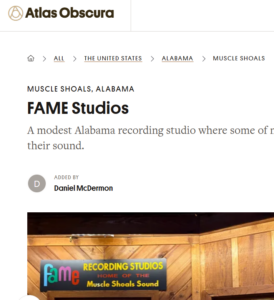 That story — one of hundreds like it — is exactly the kind of thing that caught the attention of Atlas Obscura. The widely read guide to the world’s most extraordinary places has spotlighted FAME Recording Studios in a new feature, tracing our story from a Florence drugstore to our place in the permanent record of American music. For a studio built on making history, it’s a recognition that feels earned. FAME — Florence Alabama Music Enterprises — was founded in 1959 above Florence’s City Drug Store, a modest beginning for what would become one of the most consequential addresses in recorded music. Rick Hall moved the operation to Muscle Shoals, first to a former tobacco warehouse on Wilson Dam Road, and eventually to our current home on Avalon Avenue. By 1961, Arthur Alexander’s “You Better Move On” was introducing the world to what would come to be called the Muscle Shoals Sound. Two years later, Jimmy Hughes recorded “Steal Away” here, and the momentum never stopped.
Atlas Obscura captures something important about what makes that sound so hard to explain: it’s not a formula. It’s a feeling — soul, R&B, country, gospel, and pop converging in a way that seemed to unlock something in whoever stepped up to the microphone. The Muscle Shoals Rhythm Section, known as the Swampers, were the architects of that feeling, playing on hundreds of recordings and becoming one of the most sought-after backing bands in the world without most listeners ever knowing their names.
Aretha Franklin came to FAME in early 1967 and later said that session was the turning point that made her the Queen of Soul. Otis Redding recorded here. So did Wilson Pickett, Etta James, Little Richard, Lou Rawls, Candi Staton, and Clarence Carter. The decades brought Alicia Keys, Jason Isbell, Demi Lovato, and the Drive-By Truckers through these doors. What draws artists across six decades and across every genre is harder to name than it is to hear: FAME has a sound, and more than that, it has a feeling.
Rick Hall, our founder, was named Producer of the Year by Billboard in 1971 and inducted into the Alabama Music Hall of Fame in 1985 as the “Father of Muscle Shoals Music.” His son Rodney and widow Linda carry that work forward today, and FAME is as active as it has ever been — a working studio, a historic landmark, and a living piece of American music.
FAME is listed on the National Register of Historic Places (2016) and the Alabama Register of Landmarks and Heritage (1997). That designation matters — but what matters more is that the studio is still running, still recording, and still capable of the kind of magic that made Duane Allman pitch a tent in our parking lot just to get inside.
Read the full Atlas Obscura feature at atlasobscura.com/places/fame-studios. Then come see it for yourself — tours run Monday through Friday at 9 a.m. and 4 p.m., and Saturdays from 10 a.m. to 2 p.m. Plan your visit at famestudios.com/tour.
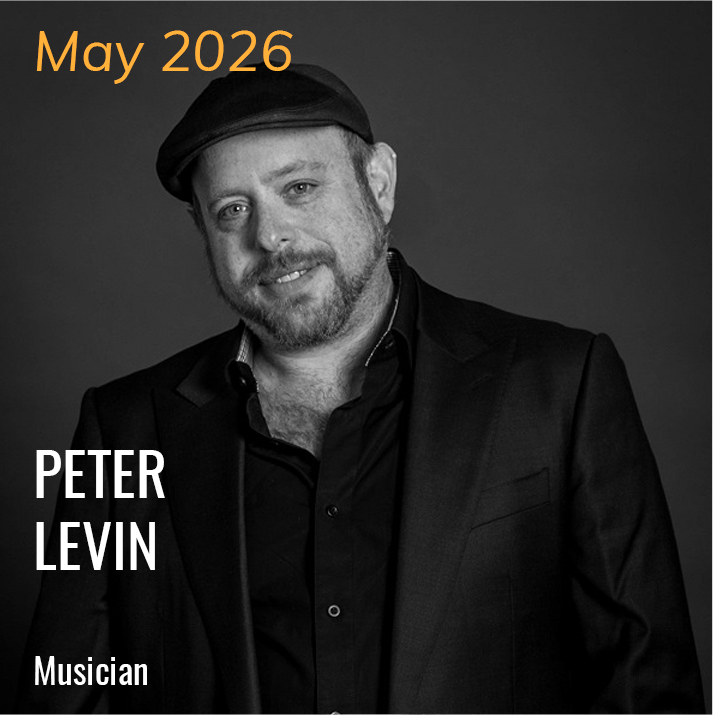 At FAME Recording Studios, we have always believed that great records begin with great musicians. Few embody that spirit more than Peter Levin.